Living in Wallingford: Complete Area Guide
Thinking about making Wallingford your home? This guide covers what you need to know about living in one of South Oxfordshire’s most historic market towns, whether you are moving out of Oxford or London, looking for a family home with character, or considering a property investment.
In short: Wallingford is a riverside market town of around 12,000 people on the River Thames, sitting between the Chiltern Hills and the North Wessex Downs. It has a thousand years of history, a lively independent high street and a strong sense of community. There is no mainline station in the town itself, but Cholsey and Didcot Parkway are close by, putting London Paddington within roughly an hour. Property costs more than in neighbouring Didcot, but far less than Oxford or Henley for comparable space, and the rental market is steady all year.
Most people who know Wallingford know it from somewhere else. Fans of Midsomer Murders recognise its Market Place as the fictional town of Causton. Crime readers know it as the home of Agatha Christie for more than forty years. Rowers know the stretch of river where Oxford University crews train for the Boat Race.
What surprises newcomers is how much of a real, working town it still is. There is a Friday market, a theatre and cinema in the old Corn Exchange, a lido by the river, and a calendar of festivals that would be impressive for a place twice its size. It is close enough to Oxford, Reading and the science campuses at Harwell and Culham to be practical, and far enough from all of them to feel like somewhere in its own right.
None of that makes Wallingford perfect. The roads into town can get busy at peak times, commuting by train usually means a short drive or bus first, and house prices reflect the town’s popularity. But for people who want history, countryside and community in one package, it is one of the most rewarding towns in the county.
This guide covers what the town is known for, what daily life feels like, transport, the property and rental markets, schools, and the honest pros and cons.
What Is Wallingford Known For?
Wallingford’s story starts with Alfred the Great. In the late 9th century it was laid out as a fortified Saxon burh to defend a key crossing of the Thames, and parts of those earth ramparts can still be walked today at the Kine Croft and Bull Croft. William the Conqueror’s army crossed the river here in 1066 on its way to London, and a great Norman castle followed soon after.
That castle went on to play a central role in English history. In 1153 the Treaty of Wallingford helped bring an end to the long civil war known as the Anarchy and paved the way for Henry II to take the throne. Centuries later, the castle was one of the last Royalist strongholds to surrender in the English Civil War, and it was demolished soon afterwards. The ruins now sit within Castle Gardens, a peaceful park overlooking the Thames.
The town’s literary connection is just as strong. Agatha Christie lived at Winterbrook House on the edge of Wallingford from the 1930s until her death in 1976, and she is buried in nearby Cholsey. Wallingford Museum has a permanent display about her life in the town.
On screen, Wallingford has become familiar to millions as Causton in Midsomer Murders, with the Market Place, Town Hall and Corn Exchange all appearing regularly. And on the water, the Oxford University Boat Club trains just upstream, so it is common to see crews out on the river in the run up to the Boat Race.
What Is It Like Living in Wallingford Day to Day?
Wallingford is a compact town where most everyday needs are within walking distance. The Market Place, with its 17th century Town Hall, sits at the heart of things, and the streets that run off it hold a good mix of independent shops, cafes, pubs, banks and supermarkets.
The Friday market brings fresh produce and local traders into the square, and seasonal events such as the Christmas market draw people in from the surrounding villages. For bigger shopping trips, Oxford, Reading and Abingdon are all within easy reach.
Eating and Drinking in Wallingford
For a town of its size, Wallingford punches well above its weight when it comes to eating out. Historic coaching inns, riverside pubs and independent cafes sit alongside a range of restaurants covering everything from traditional British food to modern international cooking. Head out into the surrounding villages, such as Brightwell-cum-Sotwell, Benson, Moulsford and Goring, and you will find some of the best country pubs in South Oxfordshire, many with gardens running down towards the river or open fields.
Culture and Community
The Corn Exchange is the town’s cultural hub, run by the volunteer Sinodun Players and hosting theatre, live music and a regular cinema programme. Wallingford Museum, housed in a medieval building on the High Street, covers everything from the Saxon burh to Agatha Christie.
Every September the town hosts BunkFest, a much-loved festival of music, dance, real ale and family entertainment that fills the streets and takes over the Cholsey and Wallingford Railway for the weekend. That heritage railway, known locally as the Bunk Line, runs steam and diesel services between Wallingford and Cholsey on weekends and holidays throughout the year.
There is a strong volunteer culture in Wallingford, with active sports clubs, a rowing club, community groups and regular town events. Newcomers often say it is one of the easier places in the county to settle in and get to know people.
The River and the Outdoors
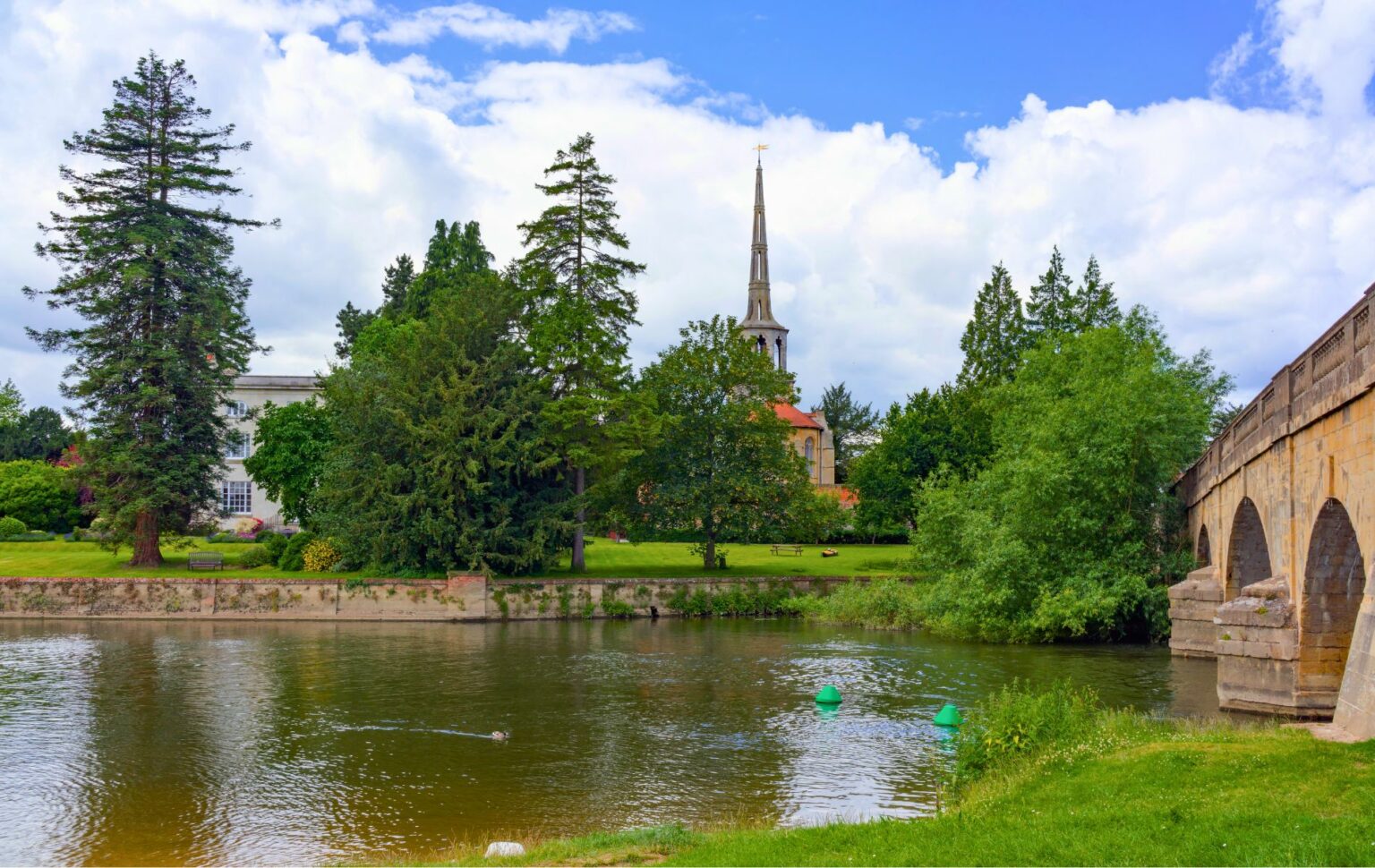
The Thames is the town’s greatest asset. The medieval bridge, with its long row of stone arches, is one of the finest river crossings on the Thames, and the Thames Path runs right through town in both directions. Riverside Park offers green space, boat hire in the summer and an open-air lido that is popular with families on warm days.
Beyond the town, the countryside opens up quickly. The Chilterns National Landscape begins just across the river to the east, while Wittenham Clumps, with its sweeping views over the Thames Valley, is a short drive or a pleasant walk to the north. The Ridgeway, one of Britain’s oldest roads, is also within reach for longer walks and bike rides.
Getting Around: Transport and Commuting from Wallingford
Wallingford does not have its own mainline railway station, but two well-served stations are close by. Cholsey station, around three miles away, has Great Western Railway services to Reading, Oxford and Didcot, with some direct trains to London Paddington. Didcot Parkway, roughly six miles away, has very frequent fast trains to London, Oxford, Reading and Bristol.
| Destination | Approx. Journey Time | Mode |
|---|---|---|
| Cholsey station | 10 minutes | Car or bus |
| Didcot Parkway | 15 to 20 minutes | Car or bus |
| London Paddington | Around 1 hour (via Cholsey or Didcot) | Train (GWR) |
| Reading | 15 to 20 minutes from Cholsey | Train (GWR) |
| Oxford | 20 minutes from Cholsey, or 30 to 40 minutes by bus | Train or bus |
| Harwell Campus | Around 20 minutes | Car |
| Culham Campus | Around 15 minutes | Car |
| M40 (Junction 6) | Around 20 minutes | Car |
| Heathrow Airport | Around 50 minutes | Car |
Regular bus services connect Wallingford with Oxford, Reading, Didcot and the surrounding villages, which makes life without a car realistic for many town centre residents.
By road, the A4074 runs north to Oxford and south to Reading, while the A4130 links Wallingford with Didcot to the west and Henley to the east. The town bypass takes much of the through traffic away from the historic centre, although the routes into town can still slow down at peak times.
Local employment is also stronger than many people expect. Wallingford is home to organisations such as CABI, HR Wallingford and the UK Centre for Ecology and Hydrology, and the major science campuses at Harwell and Culham are both within a short drive. Combined with reliable broadband in most parts of town, this makes Wallingford a practical base for hybrid workers.
The Property Market in Wallingford
Wallingford sits in one of the most sought-after districts in the South East. According to the Office for National Statistics, the average house price across South Oxfordshire was £476,000 in July 2026, up 3.0% on the year before. First-time buyers in the district paid an average of £383,000. By property type, detached homes averaged £780,000, semi-detached homes £456,000, terraced homes £375,000 and flats £238,000.
Within the Wallingford area itself, the town centre tends to be the more affordable option, with recent price guides putting average values in the town at around £400,000. Prices climb noticeably in the surrounding villages, with Brightwell-cum-Sotwell and Crowmarsh Gifford averaging well over £650,000, and riverside homes and larger period properties commanding a significant premium.
Popular Areas at a Glance
- Town centre: Period cottages, townhouses and flats within walking distance of the Market Place, the river and the High Street. Popular with downsizers, couples and first-time buyers.
- Winterbrook and the south of town: Larger homes, quieter streets and easy access to the river and the bypass.
- Newer developments on the edge of town: Modern family homes with gardens and parking, often the best value for growing households.
- Crowmarsh Gifford: Just across the bridge, with a village feel, riverside walks and some of the most expensive homes in the area.
- Cholsey: A large village with its own railway station, making it a favourite with London and Reading commuters.
- Brightwell-cum-Sotwell and Benson: Attractive villages with strong community life and a mix of cottages and larger detached homes.
Because prices can vary so much between a terraced cottage in town and a detached home a mile or two away, accurate local pricing matters. Speaking to a Wallingford estate agent who knows how the river, school catchments and station access affect value will give you a much clearer picture than an online estimate.
Renting and Investing in Wallingford
Rents in South Oxfordshire are higher than the national average but well below Oxford. The ONS reported that average private rent across the district was £1,402 a month in August 2026, up 3.5% on the year before. One-bedroom homes averaged £1,042, two-bedroom homes £1,292 and three-bedroom homes £1,615. For comparison, average rent in Oxford is close to £2,000 a month, which is one reason many renters look to towns like Wallingford instead.
Demand comes from several directions:
- Science and research workers: Staff at Harwell, Culham, CABI, the UK Centre for Ecology and Hydrology and HR Wallingford.
- Commuters: Professionals working in Oxford, Reading or London who want a market town lifestyle.
- Families: Households relocating to the area who rent before choosing where to buy.
- Downsizers and young professionals: People looking for town centre living within walking distance of shops and the river.
For landlords, Wallingford offers a reliable tenant pool and properties that tend to let quickly when they are well presented and priced correctly. Letting still comes with responsibilities such as deposit protection, gas and electrical safety certificates and the right tenancy paperwork, and the rules for landlords in England continue to change. Many owners choose to work with a Wallingford letting agent to handle referencing, compliance and day-to-day management, particularly if they live away from the area.
Short Stays and Serviced Accommodation
Wallingford also attracts a steady stream of short-stay visitors. Contractors and visiting scientists working at Harwell and Culham, wedding guests at the many venues nearby, families visiting Oxford, walkers on the Thames Path and the Ridgeway, crowds for BunkFest and Henley Royal Regatta, and Midsomer Murders and Agatha Christie fans all need somewhere to stay. Hotel choice in the town itself is limited, which leaves room for well-presented short-let homes.
Running a short let takes more work than a standard tenancy, with regular cleaning, guest communication and pricing that changes through the seasons. Before starting, check that your mortgage, lease and insurance all allow short lets. Owners who would rather not handle bookings themselves often look at serviced accommodation management in Wallingford to keep occupancy steady and the property guest-ready.
Schools in Wallingford
Wallingford has a good choice of schools for a town of its size. There are several primary schools in and around the town, and many of the surrounding villages, including Cholsey, Brightwell-cum-Sotwell and Benson, have their own well-regarded village primaries.
At secondary level, Wallingford School is a mixed academy for students aged 11 to 18 with its own sixth form. Families also look further afield to schools in Didcot, Abingdon and Henley, and to the state-funded Europa School UK at Culham.
The independent sector is particularly strong locally. Moulsford Preparatory School, Cranford House, and the well-known independent schools in Abingdon, Oxford and Reading are all within a reasonable drive. Reading’s selective grammar schools are also an option some families explore.
Ofsted introduced a new report card system for school inspections from late 2025, so it is worth reading each school’s latest report directly rather than relying on older one-word grades. Families should also confirm catchment areas with Oxfordshire County Council before committing to a purchase, as they can make a big difference to admissions.
Pros and Cons of Living in Wallingford
Wallingford suits people who want the character of a historic market town, easy access to the river and countryside, and a strong community, while staying within reach of Oxford, Reading and London. Whether it is the right fit depends on what you value most.
The Pros of Living in Wallingford
- A genuine historic market town on the Thames, with Saxon ramparts, castle ruins, a medieval bridge and a lively Market Place
- A strong community and events calendar, including BunkFest, the Friday market and the Corn Exchange theatre and cinema
- Quick access to Cholsey and Didcot Parkway stations, with London Paddington around an hour away
- Local employers in science and research, plus Harwell and Culham campuses within a short drive
- Outstanding countryside, with the Chilterns, Wittenham Clumps, the Thames Path and the Ridgeway all close by
- Better value for space than Oxford or Henley, with a wide range of homes from town cottages to village family houses
- Steady rental demand, with average district rents of £1,402 a month
The Cons of Living in Wallingford
- There is no mainline station in the town, so rail commuters usually need a short drive or bus to Cholsey or Didcot
- House prices are higher than in Didcot, and the most desirable riverside and village homes come at a premium
- Roads into town can be congested at peak times, particularly around the bridge
- The town is popular but small, so the choice of homes on the market at any one time can be limited
- Some riverside areas sit in flood zones, so buyers should always check flood risk and insurance before committing
Final Thoughts
Wallingford is one of those rare towns that manages to feel both historic and lived in. It has the castle ruins, the medieval bridge and the literary connections, but it also has a busy high street, a full calendar of community events and genuine local employment. Commuters get quick access to two railway stations, families get space and countryside, and investors get a dependable mix of long-term tenants and short-stay visitors.
The lack of a station in the town and the price premium over Didcot are real considerations, but for most people they are fair trade-offs rather than deal-breakers. If you value character, the river and a strong sense of community, Wallingford is well worth a closer look.
Frequently Asked Questions
Is Wallingford a nice place to live?
Yes. Wallingford is a friendly, historic market town on the River Thames with a strong community, independent shops, regular events and easy access to the countryside. It suits families, commuters and downsizers alike. As with anywhere, it is worth visiting at different times of day and week to get a feel for the town before you commit.
Does Wallingford have a train station?
Wallingford does not have a mainline station of its own. Cholsey station is around three miles away and Didcot Parkway is around six miles away, both with Great Western Railway services. The Cholsey and Wallingford Railway is a heritage line that runs leisure services between the two on selected days.
How long does it take to get from Wallingford to London?
Allowing for the short journey to Cholsey or Didcot Parkway, most people can reach London Paddington in around an hour to an hour and a quarter. Fast trains from Didcot Parkway take under 40 minutes. By car, central London is typically around an hour and a half, depending on traffic.
How much does a house cost in Wallingford?
The ONS put the average house price across South Oxfordshire at £476,000 in July 2026. Within Wallingford, town centre homes tend to be more affordable, averaging around £400,000, while homes in surrounding villages such as Crowmarsh Gifford and Brightwell-cum-Sotwell often average over £650,000.
Is Wallingford a good place to invest in property?
Wallingford benefits from steady demand from science and research workers, commuters and families, as well as a healthy short-stay market. Average rents across South Oxfordshire rose 3.5% in the year to August 2026. Returns depend heavily on the property type and location, so local knowledge and careful compliance planning are important.
What is Wallingford known for?
Wallingford is known for its Saxon origins and Norman castle, the 1153 Treaty of Wallingford, its medieval Thames bridge and its long association with Agatha Christie, who lived in the town for more than forty years. It is also famous as the filming location for Causton in Midsomer Murders, and for the annual BunkFest music festival.